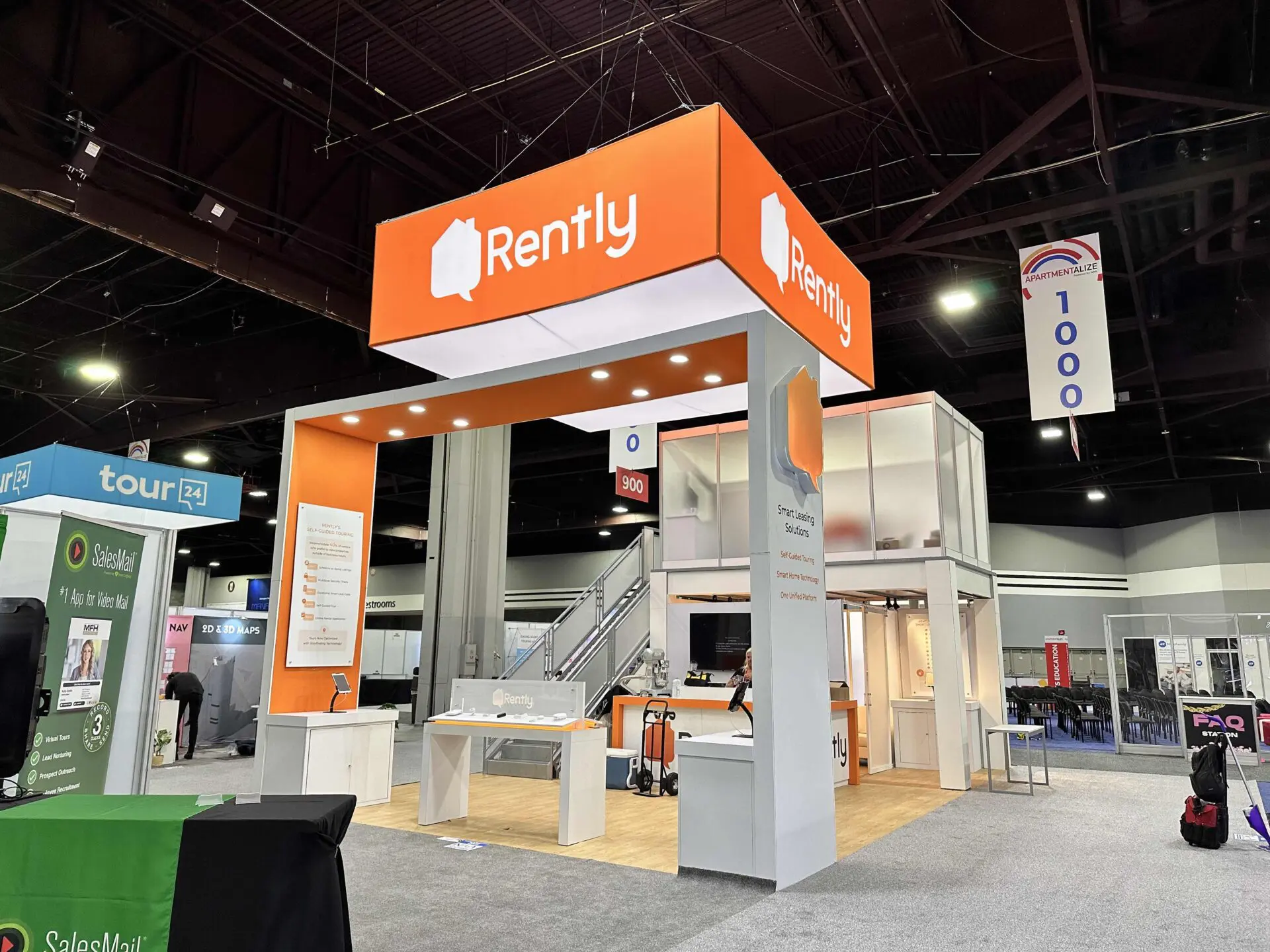
Touch kiosks, video walls, AR demos, and lead capture systems integrated directly into your booth design for measurable engagement.
Interactive trade show displays are not one tool. They are a set of digital elements that work together to create the booth experience. The right setup depends on your booth size, staffing model, and show goals. Some brands need a simple product finder. Others need a full demo wall with live data, video, and lead capture working together as one system.
The most common interactive elements we integrate include touch screen kiosks for product browsing and self-guided demos, digital signage and video walls for attention and storytelling across the aisle, QR-based experiences that send visitors to specific landing pages or offers, gamified interactions like quizzes, spin wheels, and challenges that draw foot traffic, AR and VR demos for complex products that benefit from immersive explanation, live data dashboards showing product performance or case study results, and badge scans or form-based lead capture for structured post-show follow-up. Each element has a place, and the goal is choosing the right combination for your specific show.
The goal is never to add technology for its own sake. The goal is to reduce friction. A visitor should understand what to do in two seconds. Your staff should be able to support the experience without troubleshooting hardware. Tech that works hard makes booths convert. Tech that creates confusion just adds expense to your show budget. We integrate interactive elements directly into our custom exhibit builds and double deck booths so the technology never feels bolted on after the fact.
Storytelling at Booth Speed
Digital trade show displays let you communicate faster than printed panels can. They give you motion, sequencing, and flexibility. They also let you update messaging between shows without reprinting graphics. That matters when your offer changes, your product line expands, or your campaign focus shifts mid-year. A booth that can swap content in software costs less to evolve than one that requires new vinyl every show.
Many exhibitors run into the same problem at every show. They have a great story to tell, but the booth doesn’t explain it quickly enough to stop walk-by traffic. A digital display solves that when it’s built with the right structure. We plan content flow so a visitor understands your value proposition in under ten seconds, then we support deeper engagement for people who actually stop. That two-tier approach matters because trade show attendees scan, they don’t read.
A strong digital display strategy supports staffing as much as it supports messaging. When your screens handle the first step of the pitch with clear headline messaging readable across the aisle, short motion loops that highlight one benefit at a time, product visuals that match your demo script, fast content swaps between segments and use cases, and a consistent visual identity across every screen and graphic, your team focuses on having high-quality conversations instead of explaining basics for the hundredth time that day. The display does the qualifying. Staff handles the closing.
Trade show lead capture technology should feel natural to the visitor and easy on your staff. Visitors don’t want to fill out long forms at a booth. Staff don’t want to type contact details into a phone all day. The best lead capture systems connect the booth experience to a simple next step, like scanning a badge, capturing a business card, or asking two qualifying questions that move the conversation forward.
We build lead capture directly into the interaction so visitors opt in without feeling pressured. A product configurator can end with “Email me this build list.” A quiz can end with “Send me my results.” A demo can end with “Book a follow-up call.” These actions feel like a natural conclusion to the experience rather than a sales gate. The leads you collect this way are also better leads because the visitor self-selected by completing the interaction.
The lead capture systems that work best at shows ask fewer questions and focus on qualification, capture buyer intent rather than just contact details, offer a clear reason for the visitor to share their information, use consistent tags so post-show follow-up gets routed to the right team, and make the handoff to your CRM or marketing automation platform painless on day one. If the lead path is unclear, the booth feels like a dead end and your team leaves the show with a stack of unqualified business cards. When the path is clear, your sales team gets cleaner data and faster pipeline contribution.
Interactive booth technology works best when it follows a clear process. It starts with goals and ends with a test plan. We align the technology with your booth layout and staffing model so the experience supports how people actually move through the space, not how we hope they’ll move through it.
The framework runs in six phases. First, we define the visitor action you want, whether that’s a product demo, a badge scan, a meeting request, or something else entirely. Second, we choose the interactive format that fits your booth size and audience type. A 10×10 booth runs different tech than a 30×40 island. Third, we map the visitor flow, including what people see when they walk up, what staff does next, and how the experience ends with a clear call to action. Fourth, we build the content plan, including video loops, UI screens, and graphics that match the rest of the booth design. Fifth, we test the full setup before the show and train your team on day-of use. Sixth, we review results after the show and refine the approach for the next event so every show makes the next one stronger.
This process makes the technology feel intentional rather than tacked on. It also reduces show-day risk significantly. A trade show floor is not the place to figure out what works. You need a plan you can execute, debug fast when something breaks, and improve over time. For brands running multi-show programs, our custom exhibit rentals and modular booths are designed to incorporate interactive technology that can travel intact between shows.
From first-time trade show clients to Fortune 500 brands, Xibeo is the trusted partner behind some of the most impactful exhibit experiences across the country.
Lauren, Theron, and the entire team at Xibeo are absolute professionals and the best in the business. I have worked with the whole team (I think with every team member at some point!) across 15 years and I am always satisfied with my exhibition booths and display solutions. The team are easy to work with, fast, reliable (the most important thing in events!) and adaptable. Work with Xibeo and you wont be disappointed!
Xibeo is my only go-to for the past 30 years for all Trade Shows, Logistics', Showrooms, Office, Retail store needs! They even stepped up to the plate during Covid with Custom Protective item's Theron and Lauren and their incredible team leave no stone unturned! Please feel free to contact me directly through Xibeo if i can be of any further assistance and remember to ask how Xebio went above and beyond to save a trade show in San Antonio Texas some years ago. These are seriously some incredible humans that are rare and few in today's business world, I also have a library of photos available upon request that i would be most willing to share
Tech that's bolted on after the booth is built always feels bolted on. Here is what twenty-five years of integrated booth design actually delivers.
Touch screens, video walls, and lead capture stations engineered into the booth design from day one. Power, mounting, and sightlines all planned together.
Battle-tested hardware specs and backup systems for every install. We've done this enough to know which components fail at midnight before opening day.
Capture systems built into the experience instead of bolted to a clipboard. Cleaner data, fewer abandoned forms, faster post-show follow-up.
We train your booth staff on the tech the morning of the show. No fumbling with kiosks during your first qualified prospect interaction.
Tell us your show goals, your booth size, and what you need visitors to do. We'll come back with an interactive technology plan that integrates directly into the booth design with hardware specs, content strategy, and lead capture flow.
Get a QuoteCommon questions from brands evaluating booth technology, lead capture systems, and integrated digital experiences.
Start with your sales process, not the technology catalog. If you need fast brand awareness across heavy walk-by traffic, focus on digital displays and short content loops that read across the aisle. If you need qualified meetings, focus on lead capture and structured demos that move visitors through a defined funnel. The right choice is the one that supports your team's actual workflow at the show, not the one that looks the most advanced in a vendor demo. Booth technology should solve a specific problem your sales team has at every show. If you can't name the problem, the tech isn't the answer yet.
Yes. A single touchscreen kiosk or well-placed video wall can significantly improve engagement in a 10x10 or 10x20 booth if the messaging is clear and the interaction is simple. Smaller booths actually benefit more from focused interactive elements because there's less competition for visitor attention within the space. The mistake to avoid is trying to fit too many tech elements into a small footprint. One well-executed interactive station beats three half-finished ones every time. Our portable trade show displays integrate digital signage and tablet-based lead capture as standard features for smaller footprints.
The best lead capture system is whatever feels least like a sales gate to the visitor. Badge scanners are fast and reliable for shows with proper badge tech. Tablet-based qualification quizzes work well for booths with active demos because the visitor's already engaged. QR codes that route to short landing pages capture intent without forcing forms at the booth. The key is integrating capture into the experience naturally. A product configurator that ends with "email me this build list" generates better leads than a fishbowl drawing because the visitor self-qualified by completing the interaction.
Pricing varies widely based on hardware specs, content development, and integration complexity. A basic touchscreen kiosk with custom interface design typically runs $4,000 to $8,000 per unit including hardware, content, and integration. A full LED video wall with custom content programming runs $25,000 to $80,000 depending on size and resolution. AR or VR demo experiences with custom 3D content range from $15,000 to $60,000 depending on application complexity. Lead capture systems integrated into existing booth elements typically run $2,000 to $6,000 per show. We provide all-in pricing on the first call so finance gets the full picture upfront, including hardware, content, training, and on-site support.
Hardware fails. We design for that reality from the start. Every tech-heavy booth ships with backup hardware on-site for critical components, including spare displays, power supplies, and tablets. Our install crews stay through opening day to confirm everything works during the first attendee rush. For shows in major markets, we have local technicians on call who can be at the booth within hours if something fails mid-show. We also build content systems that degrade gracefully. If a single screen goes down, the rest of the experience keeps working instead of cascading into a full system failure.
Yes, and that's where the math starts working in your favor. Hardware specifically engineered for trade show travel handles repeated install and dismantle cycles without the wear that destroys consumer-grade tech. We build interactive components into our custom exhibit rentals and modular booths so the technology travels with the booth across the show calendar. Content updates between shows happen in software, so you can swap product demos, refresh messaging, or change campaign focus without reprinting graphics. For multi-show programs, the per-show technology cost drops significantly when the same hardware and content infrastructure runs across the calendar.